English thyme
Thymus vulgaris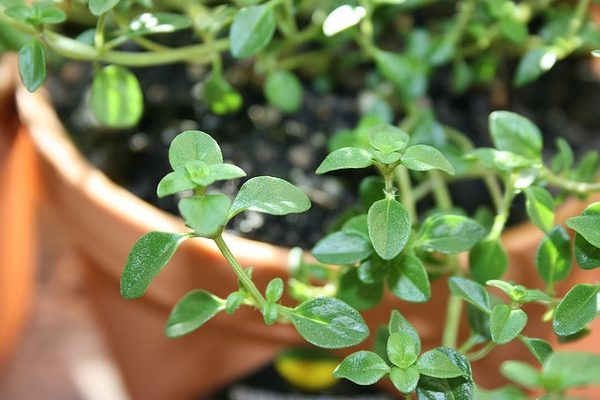
Small fragrant leaves cover low woody stems.
Find its rhythm
Light
Sun for much of the day
Water
Let the upper soil dry before watering; avoid constantly wet roots. Start with a soil check every 7 days and adjust for your conditions.
Care through the seasons
Soil & drainage
Use a particularly well-drained mix or bed. Avoid dense, water-retaining soil.
Climate
Match planting time to your local season and the plant’s frost tolerance.
Seasonal care
Annual herbs may flower and finish their life cycle; consider succession planting.
Feeding
Feed modestly during growth according to the label and growing medium.
Pruning
Trim lightly to encourage branching where suitable; do not remove all healthy growth.
Propagation
Stem cuttings
Hardiness
5a, 5b, 6a, 6b, 7a, 7b, 8a, 8b, 9a, 9b
Watch for
Bolting · Dry container roots · Aphids
Care-group starting guidance; adapt to your cultivar and local climate.
Pet & child safety
Non-toxic to cats and dogs (ASPCA)
Not in the California Poison Control or poison.org plant lists — treat it as unsafe until you know more
Non-toxic doesn’t mean safe to eat: any plant can still upset a stomach or be a choking risk.
Keep plants out of reach of children and pets. Never eat a plant based on an app.
If any is eaten: Call your local poison control centre or vet. In the US: Poison Control 1-800-222-1222; ASPCA Animal Poison Control (888) 426-4435 (a fee may apply).
Sources checked 10 Nov 2026. Lists change, so check the source before relying on it.