Pineapple sage
Salvia elegans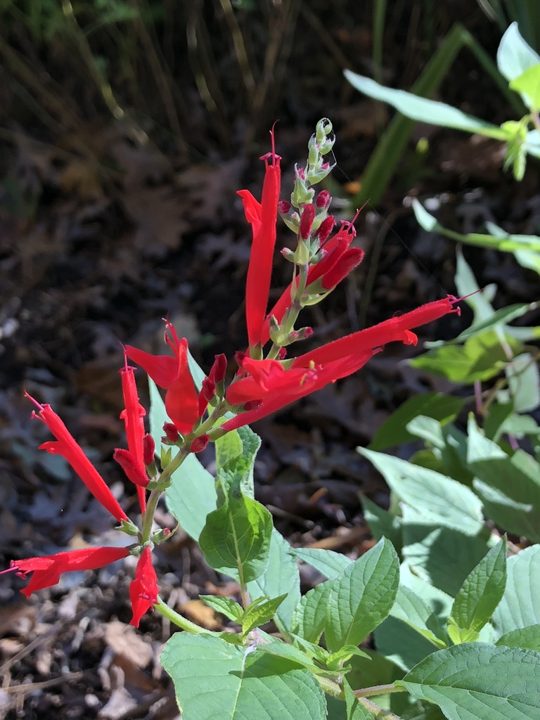
Soft, hairy, toothed leaves and bright red tubular flowers.
Find its rhythm
Light
Sun for much of the day
Water
Check containers often. Keep roots supplied with moisture without leaving the pot standing in water. Start with a soil check every 3 days and adjust for your conditions.
Care through the seasons
Soil & drainage
Use a draining container mix. Outdoor beds need drainage as well.
Climate
Match planting time to your local season and the plant’s frost tolerance.
Seasonal care
Annual herbs may flower and finish their life cycle; consider succession planting.
Feeding
Feed modestly during growth according to the label and growing medium.
Pruning
Trim lightly to encourage branching where suitable; do not remove all healthy growth.
Propagation
Stem cuttings
Hardiness
8a, 8b, 9a, 9b, 10a, 10b
Watch for
Bolting · Dry container roots · Aphids
Care-group starting guidance; adapt to your cultivar and local climate.
Pet & child safety
Not in the ASPCA list — treat it as unsafe until you know more
Non-toxic to children (California Poison Control)
California Poison Control lists the genus Salvia as a whole, not this species by name.
Non-toxic doesn’t mean safe to eat: any plant can still upset a stomach or be a choking risk.
Keep plants out of reach of children and pets. Never eat a plant based on an app.
If any is eaten: Call your local poison control centre or vet. In the US: Poison Control 1-800-222-1222; ASPCA Animal Poison Control (888) 426-4435 (a fee may apply).
Sources checked 10 Nov 2026. Lists change, so check the source before relying on it.