Purple shamrock
Oxalis triangularis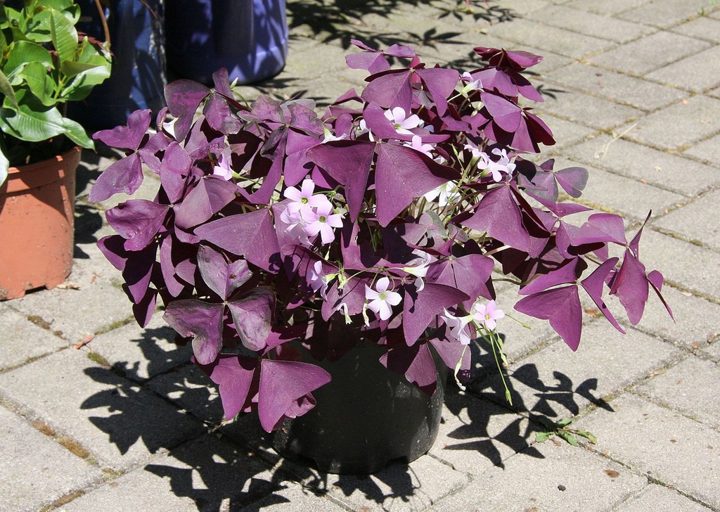
Triangular maroon leaflets in threes fold closed at night.
Find its rhythm
Light
Sun to partial shade
Water
Check the upper soil layer; water when it has begun drying, then empty the saucer. Start with a soil check every 7 days and adjust for your conditions.
Care through the seasons
Soil & drainage
Use an airy container mix and a pot with open drainage holes.
Climate
Keep conditions steady and protect tropical foliage from cold drafts.
Seasonal care
As growth slows, check moisture before watering; the same calendar interval may be too frequent.
Feeding
Feed only during active growth, following the product label. Pause if roots are stressed.
Pruning
Remove dead foliage with clean tools; keep healthy leaves to support growth.
Propagation
Division
Hardiness
8a, 8b, 9a, 9b, 10a, 11a, 11b
Watch for
Persistent wet soil · Leaf pests · Light stress
Care-group starting guidance; adapt to your cultivar and local climate.
Pet & child safety
Toxic to cats and dogs (ASPCA)
ASPCA lists the genus Oxalis as a whole, not this species by name.
Signs in cats and dogs (ASPCA): Kidney failure (rare in dogs/cats), tremors, salivation.
Toxic to children: oxalate crystals (California Poison Control)
Slow-acting oxalate crystals: no pain at first, but eating it can cause nausea and vomiting and, later, kidney damage.
California Poison Control lists the genus Oxalis as a whole, not this species by name.
Keep plants out of reach of children and pets. Never eat a plant based on an app.
If any is eaten: Call your local poison control centre or vet. In the US: Poison Control 1-800-222-1222; ASPCA Animal Poison Control (888) 426-4435 (a fee may apply).
Sources checked 10 Nov 2026. Lists change, so check the source before relying on it.