Mother of thousands
Kalanchoe daigremontiana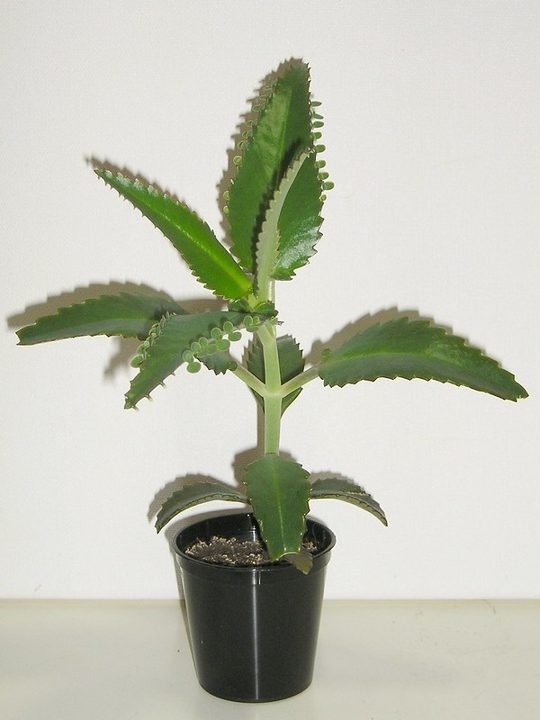
Long, fleshy, toothed leaves carry tiny plantlets along their edges.
Find its rhythm
Light
Strong light; acclimate gradually to direct sun
Water
Allow the potting mix to dry before watering thoroughly. Do not leave water in the saucer. Start with a soil check every 14 days and adjust for your conditions.
Care through the seasons
Soil & drainage
Use a gritty, freely draining cactus or succulent mix.
Climate
Provide airflow; check species hardiness before leaving outside in cold weather.
Seasonal care
Dormancy varies by species. Reduce watering when growth stops; avoid a fixed year-round schedule.
Feeding
Use a light feed during active growth only, according to the label.
Pruning
Remove dead material carefully. Protect skin from spines and irritating sap.
Propagation
Plantlets
Hardiness
9a, 9b, 10a, 10b, 11a, 11b
Watch for
Rot in wet soil · Stretching in low light · Sun scorch after a sudden move
Care-group starting guidance; adapt to your cultivar and local climate.
Pet & child safety
Toxic to cats and dogs (ASPCA)
ASPCA lists the genus Kalanchoe as a whole, not this species by name.
Signs in cats and dogs (ASPCA): Vomiting, diarrhea, abnormal heart rhythm (rare).
Major toxicity for children (California Poison Control)
Major toxicity: eating it, especially a lot, can seriously affect the heart, liver, kidneys or brain. Call Poison Control straight away if any is eaten.
California Poison Control lists it as both toxic and non-toxic; Fernly shows the toxic entry.
Keep plants out of reach of children and pets. Never eat a plant based on an app.
If any is eaten: Call your local poison control centre or vet. In the US: Poison Control 1-800-222-1222; ASPCA Animal Poison Control (888) 426-4435 (a fee may apply).
- ASPCA · Kalanchoe ↗
- California Poison Control · toxic plant list (2023 archive) ↗
- California Poison Control · non-toxic plant list (2023 archive) ↗
Sources checked 10 Nov 2026. Lists change, so check the source before relying on it.