Poinsettia
Euphorbia pulcherrima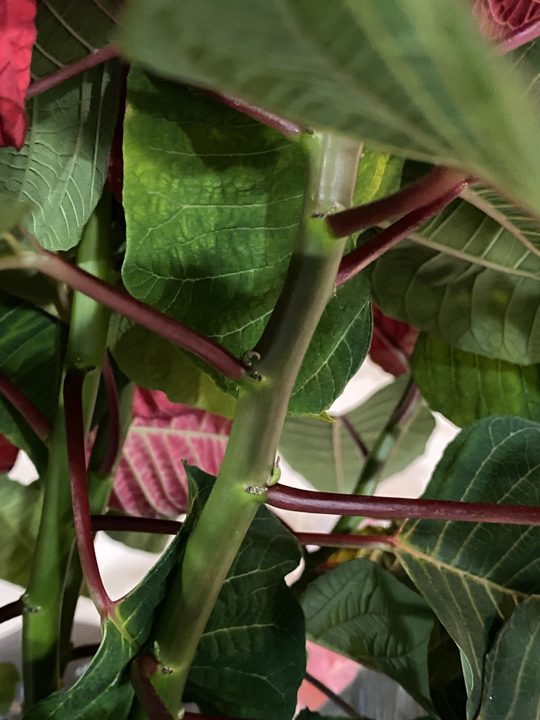
Large red, pink or cream bracts surround clusters of tiny yellow flowers.
Find its rhythm
Light
Filtered light; shelter from harsh afternoon sun
Water
Check root-zone moisture frequently in containers; water as the surface starts drying and allow drainage. Start with a soil check every 3 days and adjust for your conditions.
Care through the seasons
Soil & drainage
Use a draining potting mix; avoid compacted or continually saturated soil.
Climate
Check local frost tolerance and give flowering plants enough room for airflow.
Seasonal care
Flowering and dormancy depend on climate. Increase moisture checks during hot or windy weather.
Feeding
Use a flowering-plant feed only during growth and follow the label; more fertilizer does not guarantee flowers.
Pruning
Remove spent blooms where appropriate; do not prune next season’s buds without checking the species guide.
Propagation
Stem cuttings
Hardiness
9a, 9b, 10a, 10b, 11a, 11b
Watch for
Wilt during heat · Aphids on new growth · Leaf spots
Care-group starting guidance; adapt to your cultivar and local climate.
Pet & child safety
Toxic to cats and dogs (ASPCA)
Signs in cats and dogs (ASPCA): Irritating to the mouth and stomach, sometimes causing vomiting, but generally over-rated in toxicity.
Non-toxic to children (California Poison Control; poison.org)
Source note: may cause irritation.
Non-toxic doesn’t mean safe to eat: any plant can still upset a stomach or be a choking risk.
Keep plants out of reach of children and pets. Never eat a plant based on an app.
If any is eaten: Call your local poison control centre or vet. In the US: Poison Control 1-800-222-1222; ASPCA Animal Poison Control (888) 426-4435 (a fee may apply).
- ASPCA · Poinsettia ↗
- California Poison Control · non-toxic plant list (2023 archive) ↗
- Poison Control · poison.org plant list ↗
Sources checked 10 Nov 2026. Lists change, so check the source before relying on it.